


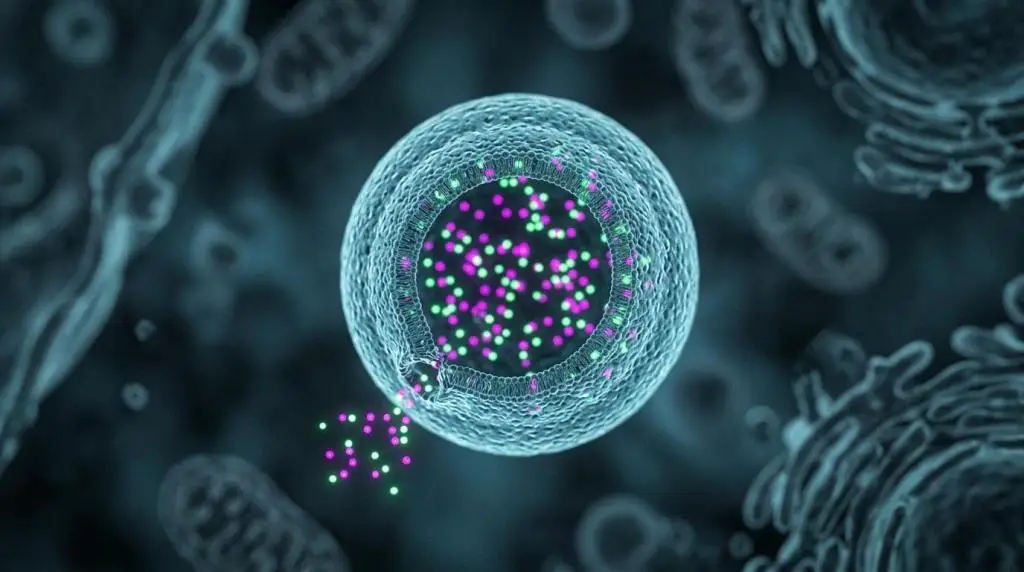
Cell-penetrating peptides, often shortened to CPPs, are often described as if they simply “cross the membrane” and carry cargo straight into the cell. That summary is catchy, but it leaves out the part that matters most in real experiments: delivery is rarely a single event. It is a sequence of interactions that depends on peptide chemistry, cargo size, cell type, dose, and what happens after entry.
That is why the best way to think about CPPs is not as universal membrane keys, but as adaptable delivery tools. They can be highly useful for moving otherwise membrane-impermeant molecules toward the cell interior, yet their success depends on more than uptake alone. In many cases, getting inside the cell is only half the problem.
Recent reviews describe CPPs as short peptides, often enriched in positively charged amino acids, that are being studied to deliver drugs, nucleic acids, proteins, imaging agents, and other payloads. The scientific picture is encouraging, though not simplistic. There is no single entry route that explains every CPP in every setting, and that reality is exactly what makes this field both challenging and productive.
Cell-penetrating peptides and what makes them distinctive
CPPs are short peptide sequences that interact with cell membranes in ways that can promote internalization of a linked or associated cargo. Older literature often called them protein transduction domains, a term still seen in some papers, though CPP is now more common. Many well-known examples are rich in arginine or lysine, which gives them a positive charge and influences how they interact with negatively charged membrane components.
What makes CPPs attractive is practical as well as biochemical. Peptides can often be synthesized with precise sequence control, modified at specific positions, and attached to a wide range of cargoes through covalent or non-covalent strategies. That gives researchers a flexible platform for tuning stability, charge, hydrophobicity, and release behavior.
The list of potential payloads is broad, and that breadth helps explain why CPPs continue to attract attention across drug delivery and research applications.
- small molecules
- proteins
- peptides
- RNA and DNA
- peptide nucleic acids
- imaging probes
- nanoparticles
The key point, though, is that a CPP is not defined only by its sequence. It is defined by its behavior in a delivery system. A peptide that works well with a fluorescent dye may behave very differently when attached to a protein or complexed with nucleic acid. The cargo can change the entire uptake profile.
Cell-penetrating peptide delivery begins at the cell surface
Before any internalization route comes into play, CPPs usually engage the outer surface of the cell. This first contact is shaped by electrostatics, membrane lipids, proteoglycans, local membrane curvature, and the distribution of receptors or endocytic machinery. Positively charged residues often promote attraction to negatively charged surface features, which increases local concentration near the membrane.
That initial binding step can be helpful, but it does not guarantee efficient cytosolic delivery. A peptide may bind strongly and still become trapped in vesicles. It may show excellent fluorescence inside cells while leaving very little intact cargo in the cytosol. This is one reason why simple uptake measurements can be misleading if they are not paired with assays that distinguish surface binding, vesicular localization, and true intracellular release.
Many CPP studies report more than one internalization route because the cell surface is not a passive barrier. Cells are active systems that constantly remodel their membranes and traffic material inward. A CPP may trigger uptake indirectly by clustering membrane components or by altering local membrane organization.
The idea of “entry” is therefore better viewed as a branching process than a single door. Once the peptide or peptide-cargo complex reaches the membrane, several paths may open at once, and the dominant one may shift as conditions change.
Major cell entry routes for cell-penetrating peptides
The literature usually groups CPP uptake into a few major categories: endocytosis, macropinocytosis, and direct translocation. These are useful labels, but they should not be treated as rigid boxes. A single CPP can appear to favor one route in one model and another route in a different system.
| Entry route | What it means | When it is often seen | Main limitation |
|---|---|---|---|
| Endocytosis | Vesicle-based uptake through cellular trafficking machinery | Common with many CPP-cargo systems, especially larger conjugates | Cargo may remain trapped in endosomes |
| Macropinocytosis | Bulk membrane ruffling and fluid uptake into large vesicles | Often reported for highly cationic peptides and some larger complexes | Efficient uptake does not always mean cytosolic access |
| Direct translocation | Membrane crossing without clear vesicular uptake as the main path | Sometimes observed at certain concentrations or with specific peptides | Mechanism can be difficult to verify and may be condition-sensitive |
Endocytosis is frequently observed because many CPP systems are large enough, charged enough, or membrane-active enough to be routed into vesicular trafficking. That can still be useful if the cargo is meant to act in endosomes or lysosomes, but it becomes a barrier when the target sits in the cytosol or nucleus.
Macropinocytosis deserves special attention because it is often discussed in CPP research, especially for arginine-rich sequences. It can generate substantial uptake, yet that large intracellular signal may mostly reflect vesicle loading rather than productive delivery.
Direct translocation is the most debated route. It refers to non-vesicular passage across the membrane, but proving that this is the dominant path is not always straightforward. Experimental artifacts, temperature shifts, fixation methods, and membrane damage can all complicate interpretation. Even so, evidence suggests that genuine non-endocytic entry can occur under some conditions.
Why there is no universal cell-penetrating peptide mechanism
One of the strongest takeaways from modern CPP reviews is that there is no single mechanism that explains all results. That is not a weakness in the field. It is a sign that CPP behavior is context-dependent and governed by several variables acting together.
A peptide’s sequence sets the stage. Charge density, amphipathicity, hydrophobic residues, secondary-structure tendency, and length all affect membrane interaction. Yet the cargo can amplify or cancel those features. A small fluorophore changes a CPP far less than a folded protein, a nucleic acid complex, or a nanoparticle surface coating.
The biological model matters just as much. Different cell lines vary in membrane composition, proteoglycan expression, endocytic activity, metabolic state, and sensitivity to membrane perturbation. A route that dominates in one cell type may be minor in another. Concentration also matters. Some reviews note that uptake mechanism can shift as peptide dose changes, which means “how it enters” is sometimes a moving target rather than a fixed property.
This is why claims of a single definitive mechanism should be treated carefully. The most solid studies usually compare multiple conditions and ask a narrower question: under these conditions, with this cargo, in this cell model, what route seems to dominate?
Cargo format changes cell-penetrating peptide performance
CPPs can carry cargo in more than one way. Some systems use covalent conjugation, where the peptide is chemically linked to the payload. Others use non-covalent complex formation driven by charge, hydrophobic interaction, or self-assembly. The choice is not cosmetic. It changes stability, size, stoichiometry, and how the system traffics inside cells.
A covalent CPP-protein conjugate may behave very differently from a CPP complexed with siRNA. The same peptide sequence can look highly effective in one format and mediocre in another. This is one reason broad statements about “the best CPP” rarely hold up well across applications.
When researchers optimize a CPP platform, they are usually tuning several moving parts at once:
- Peptide sequence: charge pattern, amphipathicity, and susceptibility to proteolysis
- Cargo properties: size, shape, folding state, and net charge
- Linkage strategy: permanent attachment versus cleavable connection
- Complex architecture: monomeric conjugate, self-assembled particle, or electrostatic complex
- Dose conditions: local concentration can shift uptake behavior
- Cell context: membrane composition and trafficking capacity shape outcomes
This also explains why in vitro success does not always translate cleanly into in vivo performance. Serum proteins, extracellular enzymes, tissue distribution, and clearance all influence whether a CPP system reaches the intended cells in a useful form.
Endosomal escape is often the real barrier in CPP delivery
A common misconception is that strong uptake equals strong delivery. In practice, many CPP systems enter cells efficiently and still fail to release enough cargo into the cytosol. The bottleneck is often endosomal escape.
Once inside an endosome, the cargo faces a narrowing window of opportunity. If it does not leave the vesicle at the right stage, it may be trafficked deeper into the endolysosomal system and degraded or inactivated. This is especially important for nucleic acids, proteins, and other payloads that need access to the cytosol or nucleus.
That is why many delivery studies now separate two questions that were once blurred together: can the CPP get the cargo into the cell, and can it get the cargo out of the vesicle? The first question is about internalization. The second is about productive delivery.
Several design ideas are often used to improve endosomal escape, though none is a universal fix.
- pH-responsive motifs
- fusogenic segments
- membrane-disruptive helper elements
- cleavable linkers
- co-formulation with endosomolytic agents
Each of these approaches introduces tradeoffs. Stronger membrane activity may help vesicle escape but also increase toxicity or reduce selectivity. Cleavable systems may improve release yet become unstable before reaching the target compartment. The best designs usually balance uptake, release, stability, and tolerability rather than maximizing only one parameter.
How researchers evaluate cell-penetrating peptide uptake more carefully
Because CPPs can bind membranes, accumulate in vesicles, and sometimes perturb cells, experimental design matters enormously. A bright intracellular signal does not always mean the cargo reached its functional destination.
Researchers often combine imaging with functional readouts. Microscopy can show where a fluorescent cargo appears to localize, while biochemical assays or reporter systems can show whether the payload actually reached the cytosol, nucleus, or another target compartment. This matters because endosomal entrapment can produce impressive images with modest biological effect.
Controls are equally important. Temperature shifts, endocytosis inhibitors, quenchers for extracellular fluorescence, and assays that distinguish intact from degraded cargo can each add useful information. No single test settles the mechanism on its own, but a consistent pattern across several methods is far more convincing than one assay in isolation.
A careful CPP study often asks practical questions rather than abstract ones:
- Where is the cargo after uptake: surface-bound, vesicular, cytosolic, or nuclear
- What fraction is intact: delivery of fragments may not match delivery of active payload
- Which route dominates under test conditions: mechanism can shift with dose and model
- Does uptake correlate with biological activity: internalization without function may not be enough
This more disciplined approach has helped the field mature. It has also made the central message clearer: productive delivery is a systems problem, not just a membrane-crossing event.
What successful cell-penetrating peptide design usually looks like
The most promising CPP strategies tend to start with a specific delivery problem rather than a generic peptide screen. A system intended to carry a small drug into tumor cells will not be optimized the same way as one built for siRNA, a genome-editing protein, or an imaging probe. The target compartment matters. So does the route of administration, the disease setting, and the acceptable safety margin.
In practical terms, strong CPP design often means matching the peptide to the cargo and then engineering the full package around the expected barriers. That may include serum stability, tissue exposure, cellular uptake, endosomal escape, intracellular release, and off-target distribution. A peptide that looks excellent in a simplified assay may need substantial redesign when moved into a more realistic model.
This is where the field remains exciting. CPPs are not stuck at the level of a single classic sequence. Researchers can build variants with altered charge distribution, introduce non-natural residues, tune linker chemistry, or combine CPPs with nanoparticles and responsive materials. The result is a broad design space with real room for progress.
A realistic view is also an optimistic one. CPPs clearly can deliver a wide range of membrane-impermeant cargoes, and the literature supports their value as adaptable intracellular delivery tools. The strongest results tend to come from systems built with mechanism in mind, especially those that treat endosomal escape as seriously as membrane entry. When both problems are addressed together, CPPs move from an interesting concept to a much more credible delivery platform.